

Looking for an insightful guide on COB LED display prices to make an informed investment?
When it comes to high-quality visual technology, COB (Chip-on-Board) LED displays have emerged as a game-changer, offering exceptional resolution, durability, and visual performance. As businesses increasingly prioritize superior display solutions for marketing, presentations, and entertainment, understanding the pricing landscape of COB LED displays becomes essential.
But to navigate this complex terrain, you need a comprehensive understanding of what influences COB LED display prices.
In this detailed guide, we will explore the various factors that impact the pricing of COB LED displays, from pixel pitch and screen size to brand reputation and manufacturing techniques.
By the end of this COB LED display pricing guide, you will be equipped to determine if investing in this cutting-edge technology aligns with your business needs and budget for the future.
Table of Contents
1: What is a COB LED Display
A COB (Chip-on-Board) LED display represents a significant leap forward in LED packaging technology. Unlike traditional Surface-Mount Device (SMD) screens, which use individually packaged LED lamps soldered onto a circuit board, COB technology mounts multiple, tiny, bare LED chips directly onto the printed circuit board (PCB).
This entire array is then covered with a uniform layer of epoxy resin, creating a single, solid, and smooth module. This fundamental difference in construction is the source of its numerous advantages.

The dense packing of diodes in COB technology enables higher brightness and better heat dissipation. It provides a smoother image with no visible pixel borders, making it increasingly relevant for displays that require high resolution and a polished appearance. The technology also supports smaller pitches, allowing for ultra-high-definition.
2: Advantages of COB LED Displays
The unique features of COB technology have led to its adoption in a wide variety of applications, and the following are its key advantages:
- Superb Visual Quality: COB LED displays deliver uniform color and brightness levels, ensuring that viewers enjoy crystal-clear images.
- Durability: They have better heat dissipation, making them suitable for continuous performance under demanding conditions.
- Ultra small pixel pitch available: Support narrow pitch LED screen such as P0.6, P0.7, P0.9, P1.0, P1.25, etc.
- Compact Design: The slim and seamless screens enabled by COB technology blend well in modern architectural environments.
- Energy Efficiency: COB displays consume less power compared to legacy systems, ensuring lower electricity costs.
While these advantages justify a higher price tag, they also promise excellent ROI for businesses that prioritize quality and reliability over upfront costs.
3: Deconstructing Core Component Costs
The premium price of a COB display is a direct reflection of the advanced technology and high-quality materials used in its construction. The manufacturing process is more complex and requires greater precision than traditional methods.

Understanding the cost of each core component helps clarify why COB is a premium investment.
LED Screen Cabinet
First, the cost of COB LED screens is influenced by the type and quality of the LED screen cabinet.
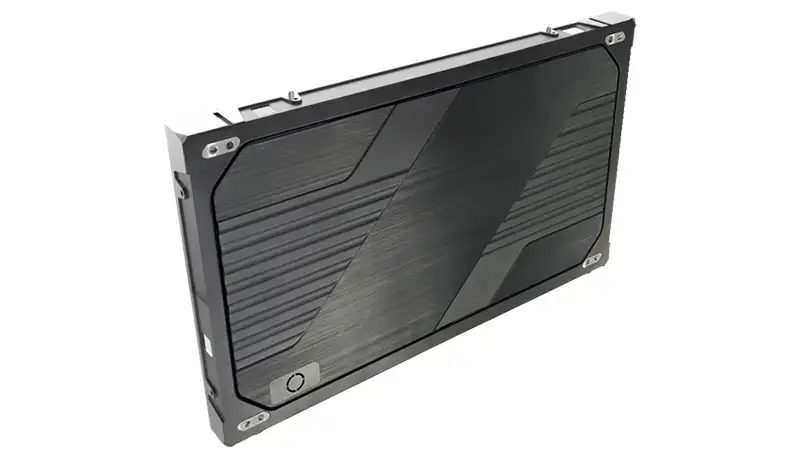
Different materials, such as aluminum, magnesium Alloy, aluminum profile, or steel, can impact both the durability and weight of the cabinet, which in turn affects material, shipping, and installation costs.
Additionally, the brand reputation plays a crucial role; well-established brands often command premium prices due to their reliability and quality assurance.
Furthermore, the dimensions of the cabinet also contribute to pricing variations. Standard sizes, like 600×337.5mm and 500x500mm, are commonly used for modular installations, but custom sizes may lead to increased costs due to specialized manufacturing processes.
High-Density PCB Substrate
The foundation of a COB module is the Printed Circuit Board (PCB). Because COB technology places bare chips directly onto this board, the PCB must meet extremely high standards.
The PCB requires exceptional thermal conductivity to draw heat away from the dense array of chips, often necessitating the use of more expensive aluminum or copper-based materials.
As the pixel pitch gets smaller, the circuitry on the PCB becomes exponentially more complex and dense, driving up material and manufacturing costs.
LED Chips (Diodes)
The foundation of a COB module is the Printed Circuit Board (PCB). Because COB technology places bare chips directly onto this board, the PCB must meet extremely high standards.
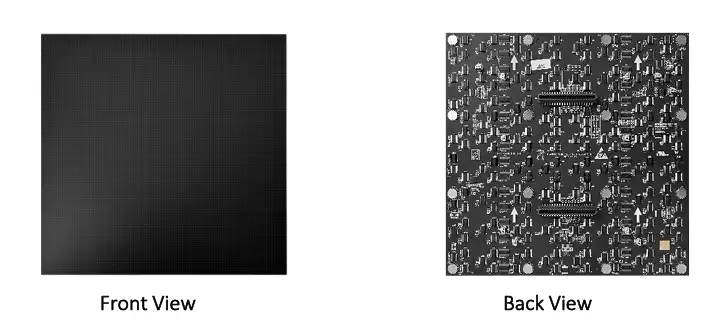
The cost of these chips is heavily influenced by their quality, brand, and “binning”—the process of sorting chips by brightness and color wavelength. Top-tier chips from leading manufacturers ensure superior color consistency and longevity but come at a higher price.
Driver IC
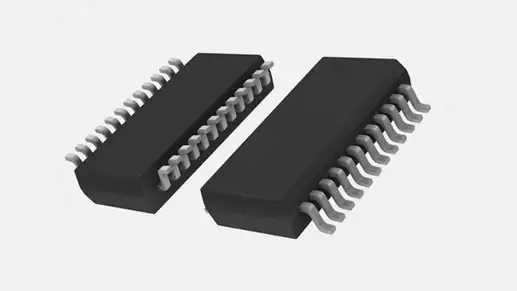
High-performance displays require high-performance electronics
COB screens, especially those with fine pixel pitches, need sophisticated driver Integrated Circuits (ICs) to manage the brightness and color of each pixel accurately.
These ICs, which support high refresh rates to eliminate flicker and high grayscale levels for smooth gradients, will have a higher price.
Integrated Encapsulation
This is the most complex and costly stage of COB manufacturing. It involves precisely placing millions of microscopic LED chips onto the PCB (a process called die bonding) and then covering the entire surface with a specialized optical epoxy or silicone.
This encapsulation layer protects the delicate chips, enhances the viewing angle, and creates a uniform, glare-free surface. The process requires massive capital investment in high-precision machinery and must be performed in a cleanroom environment to prevent defects.
Controller System
The control system, including sending and receiving cards, ensures stable signal transmission and processing, enabling features like HDR and high-frame-rate content.
Common control system brands include Novastar, Linsn, Colorlight, Huidu, Sysolutuion, etc.
The prices of controllers and models of different brands are different; some are high, and some are low. The price of low-function controllers is relatively low, and the price of high-function controllers is very high. These costs are also not negligible in the cost of the COB display.
4: Pixel Pitch: The Single Most Dominant Factor in COB Pricing
While all components contribute to the cost, the single most significant factor determining the price of a COB LED display is its pixel pitch.
As we all know, pixel pitch is the distance in millimeters from the center of one pixel to the center of the adjacent pixel. A smaller pixel pitch means the pixels are closer together, resulting in higher pixel density and a sharper, more detailed image.
The relationship between pixel pitch and cost is not linear; it’s exponential. Halving the pixel pitch quadruples the number of pixels (and thus, LED chips) within the same physical area.
For example, a P1.25 display (1.2mm pitch) has significantly more pixels per square meter than a P1.875 display (1.875mm pitch).
This dramatic increase in pixel density directly impacts nearly every component cost. It requires more LED chips, a more complex and precise PCB, more driver ICs to control the pixels, and a more challenging encapsulation process where the margin for error is smaller.
As a result, the price per square meter rises sharply as the pixel pitch decreases. A P0.9 COB LED display will be substantially more expensive than a P1.25 COB LED panel.
5: Screen Size and Cost
The overall physical size of the COB display is a primary cost driver, as a larger screen naturally requires more modules, materials, and components.
Generally, if the pixel pitch does not change, the bigger the LED screen, the higher the cost will be. In this case, the screen size will influence the price.
For more information about the COB LED Screen size, check here.
6: The Price of COB LED Screen Itself
Now, you already understand all the price factors. You might wonder: How to calculate the COB LED Screen price?
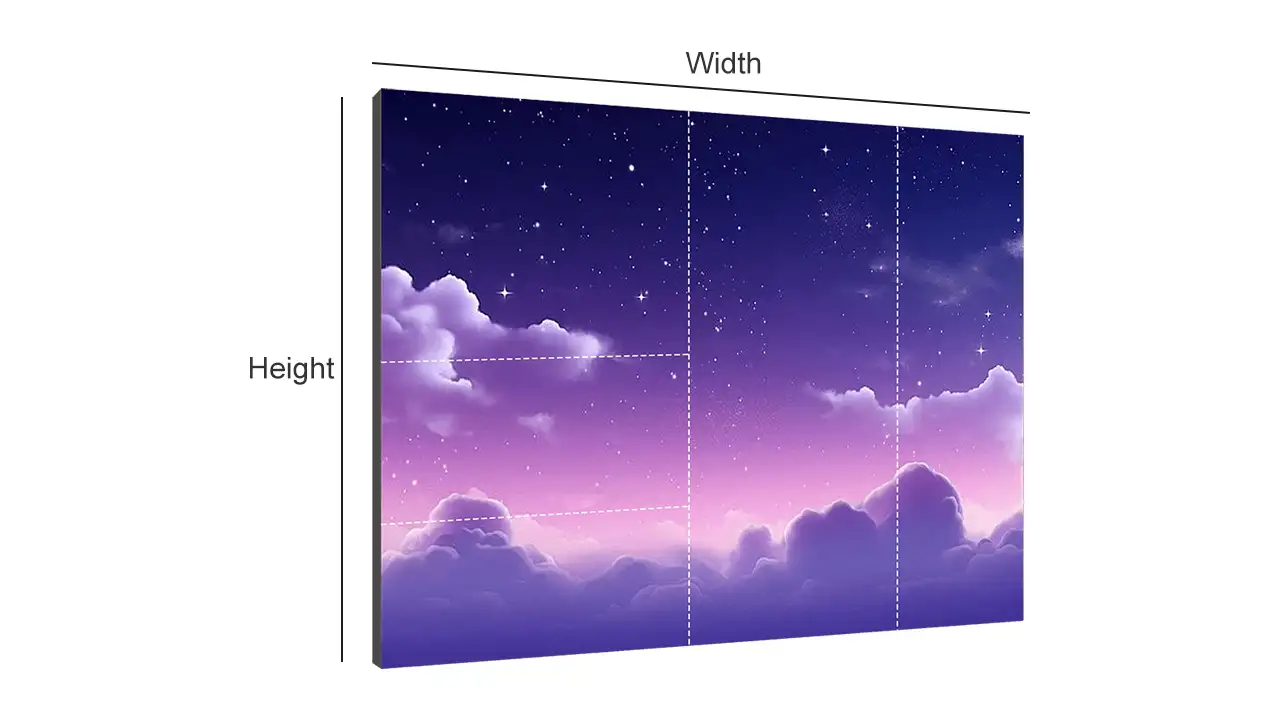
As shown in the above image, the screen’s dimensions, such as its width and height, play a critical role in determining its total area, which is typically measured in millimeters (mm) or meters (m).
For a COB LED display like a P1.25 model with a width of 4800mm and a height of 2700mm, calculating the price begins with the total area of the screen.
You can follow the common pricing formula used within the industry:
Area (W × H in square meters) × Price per Square Meter = LED Screen Price
It’s important to note that most LED display suppliers only quote the basic screen price, excluding additional components and features required for installation and operation.
COB LED Screen Total Price = COB LED Screen Price + Cost of Accessories + Cost of Control System (if applicable) + Cost of Spare Parts (if applicable) + Packaging Fee (if applicable)
For example, a P1.25 COB screen with dimensions of 4.8m × 2.7m has a total area of 12.96 square meters. If the price per square meter is $1500, the LED screen price would amount to $19,440(12.96 × $1500).
When factoring in additional costs such as a NovaStar MCTRL300 controller (cost: $300), an installation bracket (cost: $350), and 4 wooden cases for packaging (cost: $200), the final price would be calculated as follows:
LED Screen Total Price = $19440 + $350 + $300 + $200 = $20290
You can use this calculating formula to apply to other screen sizes.
7: The "Hidden" Costs: What's Included in a Final Cost?
The price of the COB LED panels themselves is only one part of the equation.
A comprehensive budget must account for numerous additional expenses, often referred to as “hidden costs,” which can significantly increase the total project investment. Failing to plan for these can lead to budget overruns and project delays.
Installation and Labor
Installing a large COB video wall is a specialized task. Costs will vary based on complexity, such as wall-mounting, hanging, or creating curved or custom shapes.
A basic wall-mounted installation might cost $200-$500 per square meter, but complex structural work, such as reinforcing a wall or building a custom free-standing frame, can increase this figure dramatically.
Installations at height or in difficult-to-access locations will also incur higher labor costs for specialized equipment like cranes or scaffolding.
Shipping, Taxes, and Duties
When purchasing a COB LED screen, shipping, taxes, and duties are essential factors that significantly affect the total cost.
These additional expenses depend on the supplier’s location, shipping method, destination country, and specific import regulations.
Shipping Options and Costs
Shipping costs vary based on the method, speed, and package size. Below are the most common types of shipping methods for COB LED screens and their respective pricing models:
- By Sea Shipping
Sea freight is popular due to its affordability, especially for large-size and heavy packages like COB LED screens transported in wooden or flight cases. This method is ideal for projects that are not time-sensitive, as it typically takes 30–45 days depending on the destination port. If time is not a primary concern but cost is, sea shipping should be your first option. - By Air Shipping
For urgent projects, air freight is the fastest shipping method, as packages generally arrive within 4–7 days. However, speed comes with a steep cost. Air shipping is recommended for smaller projects or packages that must meet specific deadlines, as long as budget constraints are not a barrier. - By Train Shipping
Train freight serves as a middle ground between sea and air shipping. It is cheaper than air shipping but faster than sea shipments, taking approximately 15–25 days. However, this method is only available for land-connected regions like parts of Europe and Asia. If your country is eligible and your project timeline allows, train shipping is a practical and cost-efficient option. - By Express Shipping
Express shipping services such as DHL, UPS, and FedEx are best for lighter packages and smaller accessories like power supplies, controllers, or LED modules. They offer door-to-door service and typically guarantee delivery within a week. Though convenient, this method becomes costly for heavier shipments and is generally recommended only for packages under 100 kg.
Beyond the shipping fees, buyers must account for import taxes and duties. Each country has its own customs regulations, and import duties often depend on the product classification.
For COB LED screens, the HS code is 852859. By providing this HS code to your local customs authority, you can inquire about the precise import tax rates applied to your purchase.
Warranty and Maintenance
While COB displays are reliable, it’s wise to consider an extended warranty or service plan, which adds to the upfront cost but provides peace of mind.
Although maintenance costs for COB are generally low, some budget should be allocated for potential repairs and periodic color calibration to ensure peak performance over the display’s lifespan.
Obviously, these costs will also increase the cost of COB LED screens.
8: The Price of Different Pixel Pitch
As previously discussed, several factors influence the price of LED screens, the most important one being Pixel Pitch.
We’ve listed the typical pixel pitches associated with each price for your reference.
| Pixel Pitch | Price Per Square Meter (USD/㎡) |
| COB P0.625 | 25000-30000 |
| COB P0.78 | 8000-10000 |
| COB P0.9375 | 4000-6000 |
| COB P1.25 | 2000-4000 |
| COB P1.56 | 1500-2500 |
| COB P1.875 | 1300-2000 |
9: Where to Get the Price?

To get the price for a COB LED screen, there are two primary options you can follow if you choose Colorlit LED as the supplier:
- Send an Email: You can directly email the team at info@colorlitled.com. Include a detailed email title along with all the necessary project details, such as screen size, application, and any specific requirements. The sales team will review your request and provide a comprehensive quotation within 24 hours.
- Use the Contact Form: Visit the Colorlit LED contact page, where you’ll find a form to fill out. Enter your information, including name, telephone number, email address, company name, and detailed project requirements. Once submitted, their representatives will get in touch with you promptly to assist with your inquiry.
10: Conclusion
In this post, we explored how COB LED screen prices are determined, what factors contribute to their cost, and how to obtain pricing tailored to your specific needs.
We also examined the importance of size, resolution, installation in influencing price, while also highlighting additional costs like shipping, taxes, and duties. Understanding these factors helps buyers estimate the total investment.
If you’re considering a COB LED screen for your project, you now know what details to prepare and who to contact for accurate quotations. Whether through email or a contact form, suppliers like Colorlit LED make it easy to get a detailed breakdown of costs, enabling you to make informed financial decisions. Price transparency and comprehensive information ensure you achieve the best value for your investment.


